
The Hidden Danger of Lazy Language in Your Business
People love talking about goals.
We talk about them at the beginning of the year. We talk about them at conferences. We go to retreats to figure them out. We write them in our planners. We color-code them. We dream about them.
But goals do not finish projects.
Action does.
And one of the quietest things that gets in the way of action for business owners is something most people do not even notice:
the language they use when they plan their work.
When your language is vague, your execution becomes vague. And when your execution becomes vague, it gets harder to know where to start, what to do, or even when you are done.
That is when projects stall.
You can work hard all week. Your calendar can be completely full. You can be exhausted by Friday. And still look back and realize the goals you cared about barely moved at all.
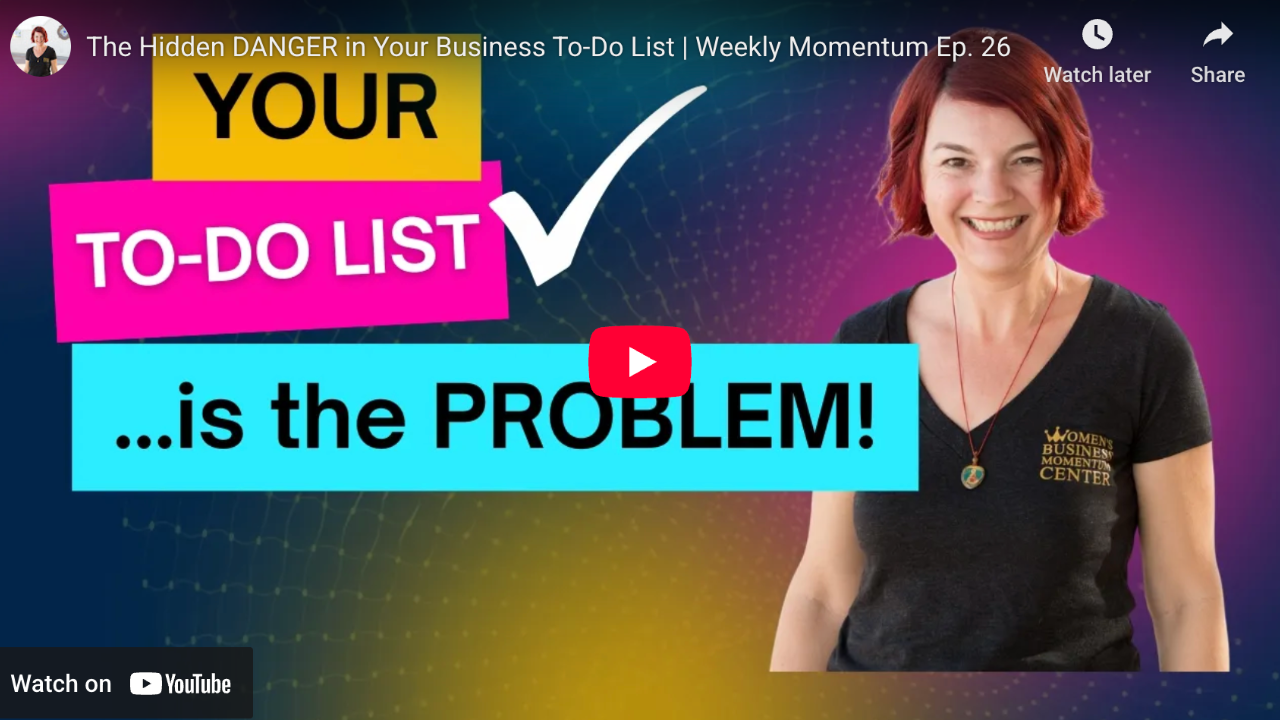
If you would rather watch or listen to this episode, you can catch it on my Get It Done Diva YouTube channel.
Because this is one of those small shifts that can change everything.
Why Goals Alone Are Not Enough
Most entrepreneurs do not have a motivation problem.
They have a clarity problem.
Or more specifically, a language problem.
You may be writing things on your list like:
-
Marketing
-
Hiring
-
Work on website
-
Systems
-
Follow up
At first glance, these look productive. They sound responsible. They sound like the kind of things a serious business owner should be doing.
But they are not actually actions.
They are categories. Outcomes. Buckets.
And your brain cannot execute a bucket.
Your brain executes specific actions.
That means when you sit down, look at a vague list, and feel resistance, confusion, or procrastination, it is not necessarily because you are lazy or undisciplined.
It may simply be because your brain has not been given a clear starting point.
The Personal Wake-Up Call That Made This Clear
Recently, I had a reminder of how powerful small habits really are.
About a year ago, I noticed my blood sugar numbers were creeping up. I was not diabetic, but I was headed in a direction I did not like. So I tightened up a few habits. I paid more attention to what I was eating. I became more intentional about meals. I cooked more at home. And within six months, my numbers improved.
Then after Christmas, I got sick.
And slowly, almost invisibly, a few habits started shifting.
I was still doing many things right. I had not eaten sugar in months. But instead of sitting down for proper meals with protein and real food, I started snacking more. My breakfast turned into eggs with gluten-free toast every morning. The toast showed up more often, the vegetables disappeared, and little by little the habits protecting my health loosened.
Nothing dramatic.
Nothing reckless.
Just a few small changes.
And sure enough, my blood sugar numbers went right back up.
That moment reminded me of something important:
I had not suddenly become unhealthy.
I had simply loosened a few habits that were protecting the results.
That is exactly what happens in business.
We do not usually lose momentum overnight.
We loosen the small habits that protect it.
And one of those habits is clear language.
The Lazy Language Trap
Lazy language happens when we get casual and vague with how we describe our work, our goals, and our agreements with ourselves.
It sounds like this:
-
Work on marketing
-
Think about hiring
-
Continue website
-
Focus on systems
-
Follow up
These phrases may sound harmless, but they create friction.
Why?
Because your brain immediately asks:
-
What exactly does that mean?
-
Where do I start?
-
What is the first step?
-
How do I know when I am done?
If your brain cannot answer those questions quickly, it naturally looks for something easier to do.
And what is easier?
Email.
Admin.
Client work.
Organizing files.
Responding to messages.
Those tasks may need to get done, but they are often not the work that truly moves your business forward.
So vague language quietly pushes you into busy work.
Why “Continue To” Is a Problem
One of my biggest planning pet peeves is writing down a to-do that starts with:
Continue to…
Continue to what?
Continue to improve the website.
Continue to work on the launch.
Continue to organize systems.
That is not a real to-do.
If something is ongoing, it probably belongs in one of three places:
-
as a recurring calendar block
-
as a habit
-
as part of a checklist or system
Your to-dos should be clear, current, actionable instructions, not vague reminders that something still exists.
When your list is full of “continue to,” you create a false sense of progress without a clear finish line.
That drains momentum fast.
The Employee Test
Here is a simple coaching test I use all the time.
Take your to-do list and imagine an employee handed it to you for review.
Would you approve it?
If their list said:
-
Marketing
-
Hiring
-
Systems
-
Website
-
Follow up
Would you think that was clear enough?
Of course not.
You would hand it back and say:
-
What exactly are you doing?
-
What step are you taking today?
-
What result are you working toward?
-
How will you know when it is complete?
And yet every week, business owners accept that exact level of vagueness from themselves.
That is the problem.
We expect clarity from our team, but often not from our own planning.
And if you are running a team of one, it is easy to think, “Well, I know what I mean.”
But if you are hesitating, procrastinating, or defaulting to easier work, then clearly your brain does not know as well as you think it does.
What Clear Language Sounds Like
Instead of writing:
Hire associate
Try:
-
Draft five bullet points describing the role
-
Research three recruiting firms
-
Write first version of job description
-
List top three responsibilities for new hire
Instead of writing:
Marketing
Try:
-
Draft outline for next week’s newsletter
-
Record intro for podcast episode
-
Write three bullet points for Instagram reel
-
Review last month’s lead sources
Instead of writing:
Work on website
Try:
-
Rewrite homepage headline
-
Choose three testimonials for sales page
-
Update about page with new bio
-
Draft FAQ section for program page
That kind of language changes everything.
Because now your brain knows where to begin.
Clarity removes friction.
And when friction drops, action becomes easier.
Why This Helps You Finish More
When the next action is clear, several things happen:
You start faster.
You feel less overwhelmed.
You know when you are done.
You can see progress.
You build momentum.
That matters because progress creates energy.
And energy makes it easier to keep going.
A vague task makes your brain stall.
A clear task gives your brain a runway.
The Weekly Momentum Framework
This is exactly why I teach the Weekly Momentum Framework.
Inside my planning rhythm, every week includes two core pieces:
-
one weekly goal
-
one weekly top 10 list
The weekly goal is the single most important move that pushes a 90-day priority forward.
The weekly top 10 list is a clear set of agreements for the week.
Not hopes.
Not categories.
Not vague intentions.
Agreements.
Because if you want stronger execution, you have to improve communication with yourself first.
The first place momentum breaks down is often not in effort, but in unclear instructions.
Write Your Tasks as If You Were Assigning Them
A simple way to tighten your language is this:
Write each task as if you were giving it to someone else.
That forces you to be more precise.
Instead of “marketing,” you have to say what marketing means.
Instead of “systems,” you have to define the next move.
Instead of “follow up,” you have to identify who, about what, and why.
When you do that, something powerful happens.
The moment you look at your list, you know what to do.
No guessing.
No hesitation.
No decision fatigue.
No autopilot.
You have already pre-decided the next action.
And that is one of the fastest ways to reduce procrastination.
The Cost of Unclear Tasks
Researchers at the University of California, Irvine found that the average worker switches tasks about every three minutes, and it can take more than 20 minutes to fully regain focus after an interruption.
That means vague planning makes a hard problem even worse.
When a task is unclear, your brain looks for relief by jumping to something easier. Then you get interrupted, switch tasks, lose focus, and never fully return to the real work. That constant shifting creates more distraction, more overwhelm, and less meaningful progress.
However, when the next action is crystal clear, your brain can move directly into execution.
That is why clear language is not just a communication skill.
It is a focus tool.
Label Your Work: In the Business or On the Business
Once you have clarified your tasks, there is another step that makes this even more powerful.
Ask yourself:
Is this working in the business or on the business?
Working in the business includes:
-
client work
-
service delivery
-
operations
-
responding to issues
-
day-to-day execution
Working on the business includes:
-
leadership
-
marketing strategy
-
hiring
-
team development
-
building systems
-
designing offers
-
thinking about the future
There is nothing wrong with working in your business.
But if you want to grow, you must protect time to work on it too.
When you label your tasks this way, you can finally see whether your week reflects the CEO role you say you want.
And that matters.
Because most business owners do not need more time. They need more intention around where their time is going.
Why Color Coding Helps
This is where color coding your calendar becomes incredibly useful.
When your week is color coded, you can quickly see:
-
how much time is going to leadership
-
how much is going to revenue work
-
how much is going to client delivery
-
how much is going to operations
-
whether recharge time exists at all
Without color coding, the week blurs together.
You may feel busy and productive, but you cannot actually see the patterns.
Once you can see them, you can change them.
That is what makes color coding such a powerful part of a weekly operating system.
Clear Communication Builds Better Systems
Last week I talked about systems and how the right systems become the glue that holds your business together.
Systems create consistency. They reduce chaos. They make it possible for your business to grow without everything depending on you.
But systems alone are not enough.
Systems only work when they are supported by clear communication and clear agreements.
And the first place that communication starts is with yourself.
When you combine clear language with strong systems, you build a business that is leaner, more focused, and less reactive.
That is how momentum becomes sustainable.
There Is No Magic Pill for Momentum
When my blood sugar numbers went back up, part of me wanted an easy external solution. A shortcut. A magic fix.
But the truth was simpler.
I had already proven I knew what to do. I just needed to return to the habits that were protecting the results.
The same is true in business.
There is no magic pill for momentum.
But there is a system.
And one of the simplest places to begin is by tightening up the language you use when you plan your week.
Your Challenge for This Week
Take a look at your to-do list.
Catch yourself when the language is vague.
Turn outcomes into specific next actions.
Write each task as if you were giving the instruction to someone else.
Then label each task:
-
in the business
-
on the business
And notice what happens.
Because when your language becomes clear, action becomes clear.
And when action becomes clear, momentum follows.
Want More Help With This?
If your goals keep getting pushed aside because your week fills up with client work, emails, and day-to-day operations, you are not alone.
This is exactly the kind of thing I help my coaching clients with.
For more than two decades, I have helped women in business install practical weekly operating systems that protect their goals, align their calendars with their strategy, and reduce the constant feeling of playing catch-up.
If you want support building those systems in a way that works in your real life and business, you can learn more about working with me one-on-one by clicking here.
Final Thought
Greatness is a habit, not a hustle.
Sometimes the fastest way to move forward is not a new strategy, a shiny tool, or a new hire.
Sometimes it is simply returning to the habits that were already capable of creating the results you want.
And one of those habits is this:
Be impeccable with your language.
Because the way you describe your work shapes the way you do your work.
And that can change everything.


